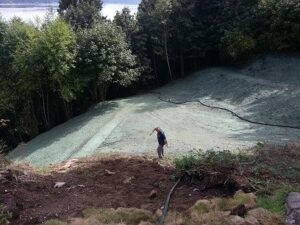
Roadsides are very vulnerable to erosion. Rainfall and stormwater runoff can carry exposed soil away from shoulders, slopes, ditches, and embankments, especially where construction or grading has disturbed existing vegetation. Over time, this erosion can create unstable areas, contribute to sediment runoff, and make roadside maintenance more difficult.
Thankfully, you can address those concerns through hydroseeding for erosion control. By combining vegetation establishment with materials that help protect exposed soil, hydroseeding can play an important role in both short-term erosion management and longer-term roadside stabilization.
Why Roadside Erosion Needs to Be Addressed
Roadside slopes are continually exposed to weather and runoff. When vegetation is sparse or soil has recently been disturbed, rainwater can loosen and transport soil particles. The problem can become more significant on sloped ground, where moving water gains speed as it travels downhill.
Erosion isn’t only an appearance issue. It can create channels and washouts, move sediment into drainage systems, and gradually deteriorate roadside slopes. As such, roadside slopes should be graded and seeded, while the underlying reason for the erosion should also be identified and corrected.
Establishing vegetation is one piece of the solution because growing plants eventually provide protective ground cover and root systems that help hold soil in place. However, that vegetation needs time to become established. This is where hydroseeding can be especially useful.
How Hydroseeding Supports Erosion Control
Hydroseeding uses water to hydraulically apply seed and other materials to prepared soil. Depending on the project, the slurry can include hydraulic mulch, tackifiers, soil amendments, and other components selected for site conditions.
For roadside projects, one major advantage is the ability to cover large or difficult areas efficiently. According to the Federal Highway Administration’s roadside revegetation guidance, hydroseeding is commonly used for road construction disturbances and can be particularly useful on steep or rough terrain where other seeding equipment may be impractical.
Mulch and stabilizing products can provide surface protection while seeds germinate and vegetation begins developing.
Hydroseeding provides the greatest long-term value when it is viewed as part of a complete revegetation and erosion-control plan. Initial mulch and stabilization measures help protect exposed soil, while successfully established vegetation provides increasingly important coverage as it matures.
Timing matters as well. Adequate moisture is essential for seed germination and early plant establishment, so seasonal conditions and access to irrigation should be considered when planning a project.
Throughout Western Washington, Northwest Bulldozing & Hydroseeding LLC provides erosion control options for our customers, including hydroseed with wood mulch and tackifier, along with solutions intended for more demanding slopes and seasonal conditions. If you need help establishing vegetation or controlling erosion along a roadside, contact us for a quote.

Leave a Reply
You must be logged in to post a comment.